Dental Bridges
Close Gaps in Your Smile with Dental Bridges
If you’re missing between one and four consecutive teeth surrounded by two healthy teeth, you may benefit from a dental bridge. Dental bridges secure into place and close gaps in your arches that could make it difficult to eat and speak properly. Because they look just like your real teeth, they also have the added benefit of improving your smile, so you can open your mouth with the confidence of knowing nobody can tell you’ve got prosthetic restorations!
Why Choose Sweet Smiles Family Dentistry for Dental Bridges?
- Durable, natural looking materials used
- We accept both in-network and out-of-network dental insurance
- Sedation dentistry options available
What is a Dental Bridge?
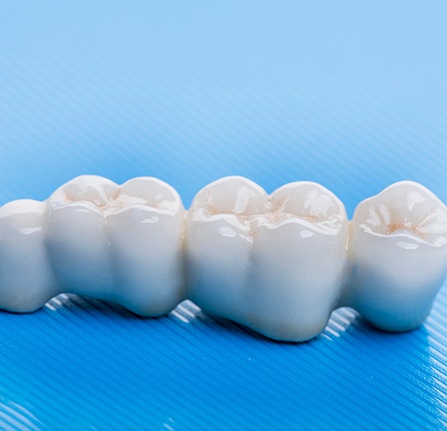
A dental bridge basically looks like a group of teeth stuck together, kind of like your teeth look inside your mouth. They are used to replace up to four consecutive missing teeth, so that you can once again eat, speak, and smile with confidence.
You can be a good candidate for a dental bridge if you have one or more consecutive missing teeth surrounded by a healthy tooth on each side.
Dental bridges can be made of a variety of durable materials, including porcelain, metal, zirconia, and resin. The exact material used in your restoration will depend on a variety of factors including where in the mouth it will be placed and how many teeth you’ll be replacing. Your dentist will discuss your options, including the pros and cons of each type at your dental bridge consultation.
Types of Dental Bridges
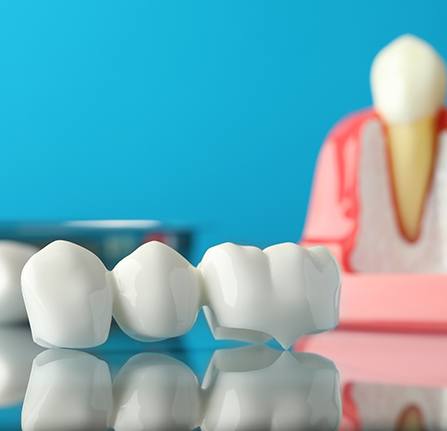
In order to best determine which type of dental bridge is best for you, it is important that you visit Sweet Smiles Family Dentistry for a consultation with your dentist. Here’s a closer look at the types available.
Traditional Dental Bridges
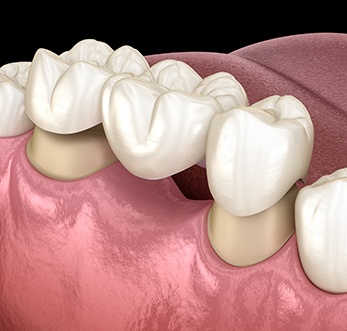
A traditional dental bridge works by filling in empty spaces in your arch with prosthetic teeth that anchor in place via two crowns placed on abutment teeth. The benefits to this type of bridge include the restored ability to eat and speak clearly, as well as the appearance of a full arch of teeth. Furthermore, because your bridge is cemented in place via two crowns, you won’t need to remove it to clean it like you would with dentures.
Implant Bridges
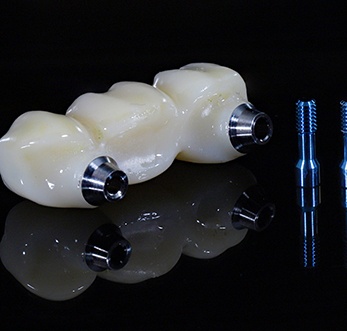
Implant bridges are dental bridges that are permanently attached to your jaw via dental implants. A dental implant is a metal (usually titanium) post that secures into your jawbone and never needs to be removed. Your implant bridge then attaches to the top of the dental implant, where it looks and feels just like your real teeth. Because it’s attached this way, you also won’t need to alter any healthy teeth to accommodate crowns.
Best of all, because implant bridges are permanent, you won’t need to remove it for cleaning like you would with a denture or replace it every ten years like you would with a traditional dental bridge.
The Benefits of Getting a Dental Bridge
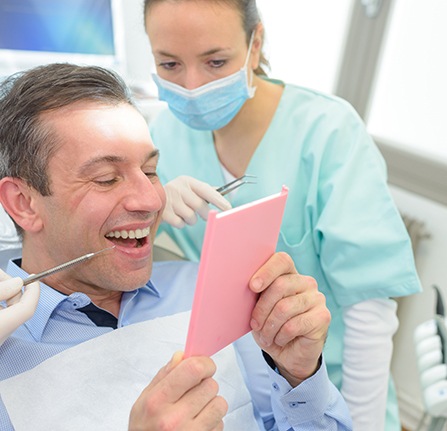
Restoring your smile is about more than just appearances. When you’re missing permanent teeth, you can suffer a variety of negative consequences, including misaligned or shifting teeth, decreased confidence and self-esteem, difficulties eating and speaking, and many other oral health problems.
A dental bridge can help remedy these issues by replacing lost teeth and making your smile whole again. If you’re ready to restore your own gorgeous grin and would like to learn more about your dental bridge options, please schedule a consultation with Sweet Smiles Family Dentistry today!
Dental Bridges FAQs
Can I Remove My Dental Bridge?
A functional dental bridge should be impossible to remove without the assistance of a qualified dentist such as Dr. Muddana. While some providers refer to partial dentures as “removable bridges,” this term is not technically accurate since true bridges are not designed to be removed. If you find that your dental bridge is loose or that you are able to remove it on your own, contact our office in Grafton or Milwaukee to schedule an emergency appointment. If necessary, store the appliance in a clean container for transport to our office. While we may be able to fix a loose bridge back in place if it is still in good shape, it will eventually be necessary to replace the restoration. Most dental bridges that receive proper care last for five to fifteen years.
Is Getting a Dental Bridge Painful?
While the process of preparing the patient to receive a traditional bridge requires the modification of two teeth so they can support the appliance, this will only be done after the they receive an appropriate anesthetic to ensure their comfort. After receiving your bridge, you can expect to feel some soreness and sensitivity for several days, but you should be able to manage this with over-the-counter pain medication. Receiving a bridge may help brace your teeth and prevent dental drift after tooth loss, which can help you avoid the discomfort of a bite misalignment later on. If you are receiving an implant bridge, you can expect to feel some soreness, and we will provide you with detailed aftercare instructions to help you keep your treatment as smooth as possible. In any case, contact our office if your pain gets worse instead of better after several days or if you notice signs of infection like fever, fatigue, chills, or a nasty taste in your mouth.
How Long Should a Dental Bridge Last?
A traditional dental bridge can last between five and fifteen years if it receives excellent care, but this can vary depending on the material the bridge is crafted from and where it is placed. Metal bridges sometimes last longer than metal-free ones, but the difference is often negligible. Restorations replacing teeth in the front of the mouth may last longer than those replacing teeth in the back of the mouth since they endure less pressure during the chewing process. Bridges supported by dental implants can last much longer than traditional appliances. However, most important factor in how long your bridge can last is how well you take care of your smile by practicing proper oral hygiene, receiving regular dental checkups, making smart eating decisions, and breaking bad habits like smoking, nail-biting, and chewing on inedible objects like ice and toothpicks.